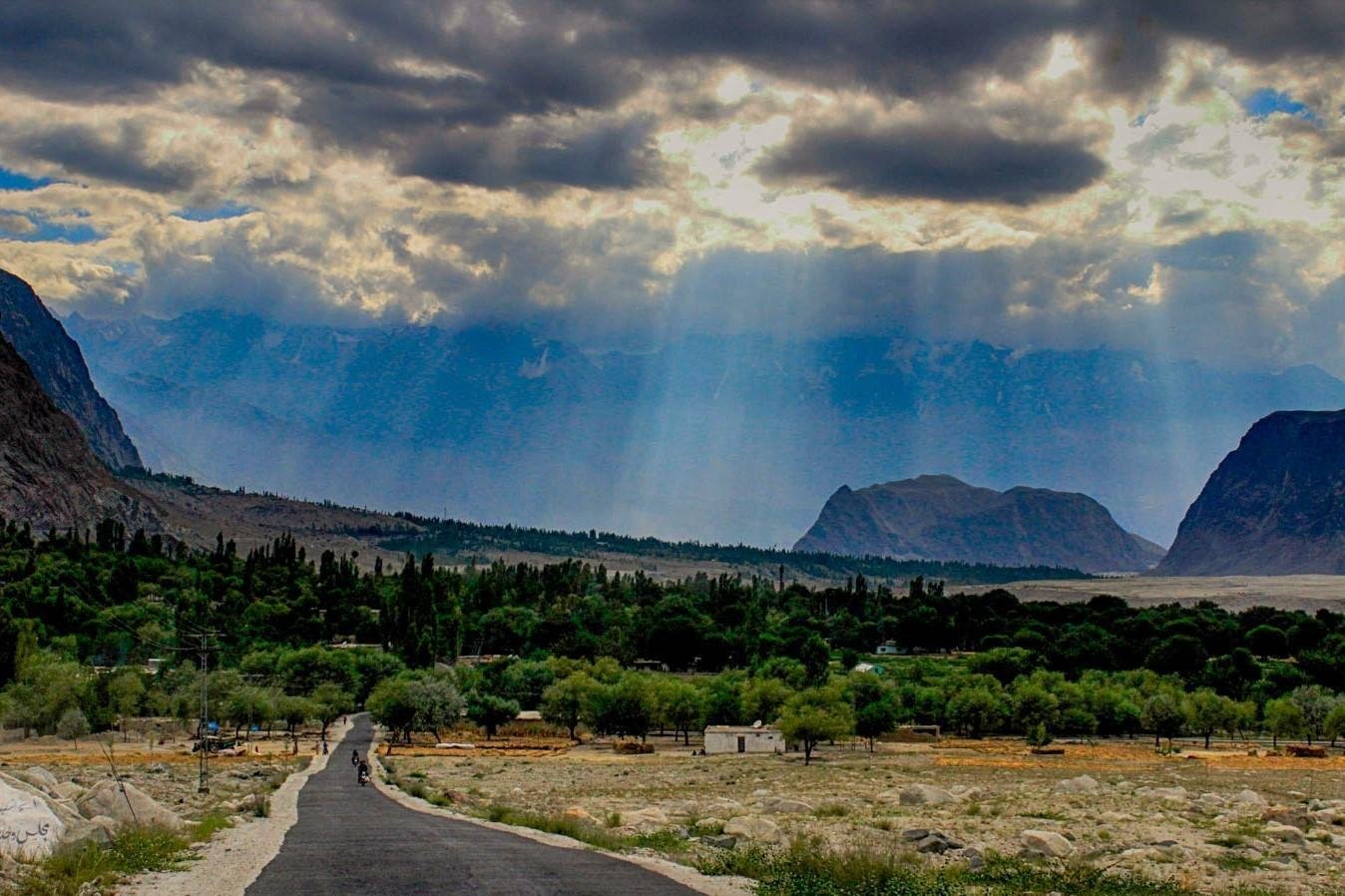
Khaplu Valley
Latitude: 35.16519194 Longitude: 76.34057407
1. Khaplu Valley - The Hidden Jewel of Baltistan
Khaplu
Valley is a historic and scenic valley located in the eastern part of
Gilgit-Baltistan, Pakistan. Serving as the administrative center of the Ghanche
District, it lies about 103 kilometers east of Skardu along the Shyok River.
Known as “Little Tibet” and “the Valley of Kings,” Khaplu combines breathtaking
landscapes, centuries-old architecture, and the living heritage of Balti
culture.
Key facts
·
Elevation: ~2,600
meters (8,530 ft) above sea level
·
Distance from Skardu: ~103 km (64 mi), 3–4 hours by road
·
Historical dynasty: Yabgo rulers of Baltistan
·
Main river: Shyok
River, a tributary of the Indus
·
Major landmarks: Khaplu
Palace (Yabgo Khar) and Chaqchan Mosque
History and Heritage
Khaplu
was once the second-largest kingdom in ancient Baltistan under the Yabgo
dynasty, which ruled for over seven centuries. The Khaplu Palace, a
19th-century royal residence now restored as the Serena Khaplu Fort hotel and
museum, exemplifies traditional Balti–Tibetan architecture. The 14th-century
Chaqchan Mosque—built under the influence of Sufi saint Syed Ali
Hamdani—illustrates a fusion of Tibetan, Persian, and Mughal design elements.
Geography and Landscape
Set
where the Shyok River bends toward the Indus, Khaplu Valley offers green
terraces, apricot orchards, and dramatic views of the Karakoram. Surrounding
peaks such as Masherbrum (7,821 m), K6, K7, and Chogolisa dominate the skyline.
The valley also provides access to Hushe Valley and several glaciers, including
Gondogoro and Masherbrum, making it a launch point for trekkers and climbers.
Culture and Lifestyle
Balti
culture shapes Khaplu’s identity through its language, cuisine, music, and
craftsmanship. Locals observe festivals like Nowruz and Eid with traditional
food—such as khambir bread and apricot soup—and hospitality central to mountain
life. The town’s architecture and wooden houses reflect centuries of adaptation
to the high-altitude environment.
Tourism and Access
Khaplu
is reachable by a paved road from Skardu, which is connected to Islamabad by
regular flights. The best visiting months are from May to September, when the
valley blooms and routes remain open. Key activities include cultural tours of
Khaplu Palace and Chaqchan Mosque, trekking toward Hushe and Gondogoro La,
rafting on the Shyok River, and exploring nearby lakes like Kharfaq and Bara.
Khaplu Valley
stands out as one of Pakistan’s most serene destinations, uniting royal
history, spiritual legacy, and Himalayan grandeur in a single valley.
Culture
and Traditions
Khaplu Valley is deeply rooted in
Balti culture and traditions. Visitors can experience traditional music, local
handicrafts, Balti cuisine, and warm hospitality. The people of Khaplu are
known for their simplicity and welcoming nature, making travelers feel at home.
Traditional Balti dishes such as
Mamtu, Prapu, and Butter Tea are popular among tourists seeking authentic local
flavors.
Adventure
and Outdoor Activities
Khaplu Valley offers numerous
outdoor activities for adventure seekers, including:
- Trekking and hiking
- Mountaineering expeditions
- Camping
- Jeep safaris
- Trout fishing
- Photography tours
- Cultural exploration
The valley is also a starting point
for expeditions toward some of the world’s highest mountains in the Karakoram
range.
Best
Time to Visit
The ideal time to visit Khaplu
Valley is from April to October.
- Spring (April–May):
Cherry and apricot blossoms transform the valley into a colorful paradise.
- Summer (June–August):
Pleasant weather perfect for sightseeing and trekking.
- Autumn (September–October): Stunning golden landscapes and cool temperatures ideal
for photography.