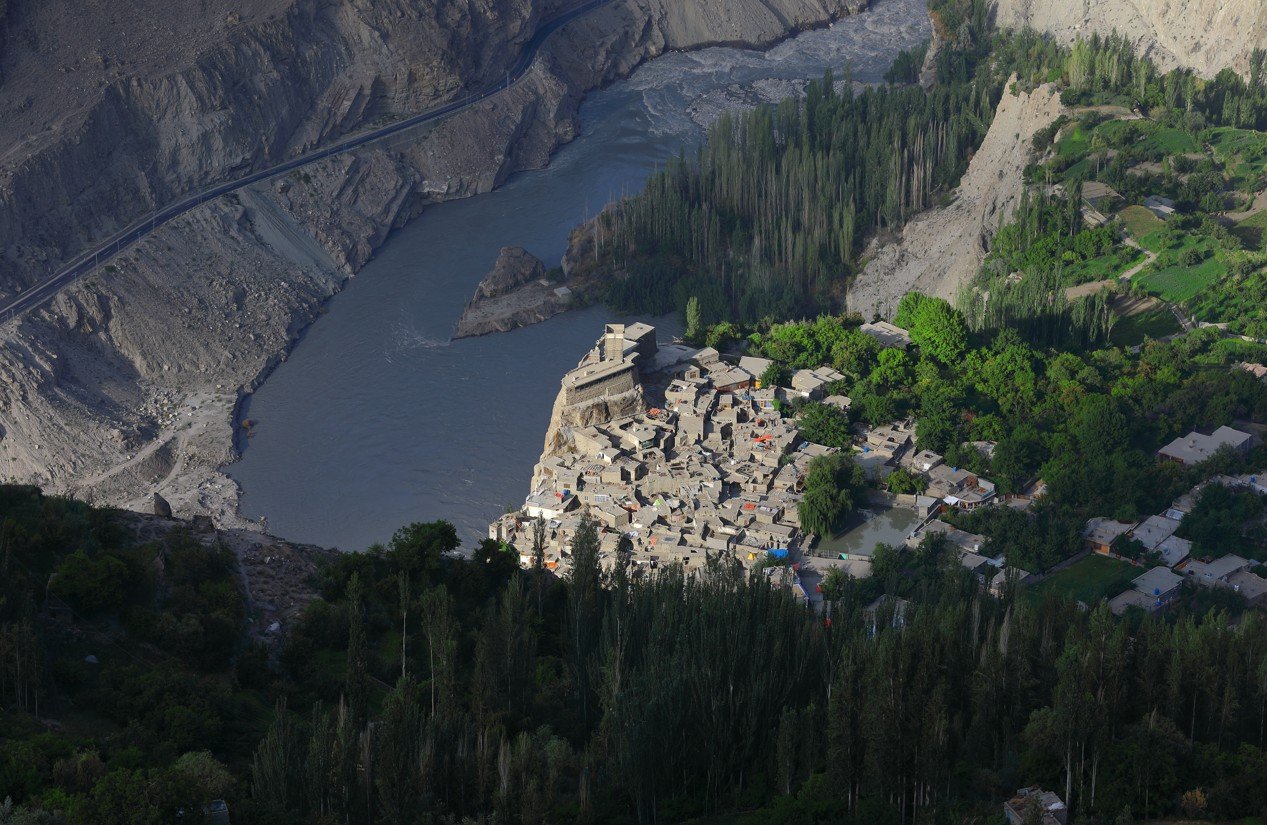
District Hunza
Latitude: 36.31670000 Longitude: 74.65000000
District Hunza – Land of
Culture and Natural Beauty
Location
District Hunza is located in the northern part of Gilgit-Baltistan,
along the legendary Karakoram Highway (KKH),
bordering China to the north. It lies at an altitude ranging from 2,000
to over 4,700 meters above sea level and covers an area of
approximately 11,695 square kilometers.
Hunza is surrounded by some of the world’s highest mountain ranges, including
the Karakoram, Himalaya, and Hindu Kush.
Background & History
Formerly a princely state, Hunza
has a rich and fascinating history shaped by ancient trade routes, royal
dynasties, and mountain cultures. The region was once an important stop on the ancient
Silk Route, connecting South Asia with Central Asia and China.
Hunza is home to remarkable cultural heritage sites such as Baltit
Fort and Altit Fort, historic
polo grounds, ancient watchtowers, mosques, and archaeological treasures like
the Sacred
Haldekish Rocks in Ganish, which contain prehistoric carvings
and inscriptions. These landmarks reflect centuries of history, resilience, and
artistic expression.
Language
& Culture
Hunza is known for its rich cultural diversity and peaceful
society. The main local languages spoken are:
· Burushaski (widely
spoken in Central Hunza)
· Wakhi (Upper
Hunza / Gojal)
· Shina (Shinaki/Hini)
Urdu and
English are also commonly spoken, especially among the younger
population.
The people of Hunza are known for their hospitality,
simplicity, and vibrant traditions. Cultural expressions
include traditional dresses, folk music, dances, and local cuisines. Hunza is
also famous for its organic fruits,
particularly apples, apricots, mulberries, cherries, and grapes.
How to Access Hunza
Hunza is easily accessible by road and air:
By Air
· Fly
to Gilgit
Airport from Islamabad (subject to weather conditions).
· From
Gilgit, Hunza is about 100 km (2–3 hours) by
road.
By Road
· Travel
from Islamabad
to Hunza via the Karakoram Highway.
· The
journey takes approximately 18–22 hours by bus
or private vehicle.
· Regular
buses, coasters, and private transport are available from Islamabad,
Rawalpindi, and Gilgit.
Activities & Experiences
Hunza offers a wide range of activities for nature lovers,
adventure seekers, and cultural explorers:
· Boating,
jet skiing, and fishing at Attabad Lake
· Trekking
and hiking in valleys such as Shimshal, Passu, and Patundas
· Sunrise
and sunset views from Duikar (Eagle’s Nest)
· Stargazing under
crystal-clear night skies
· Cultural
tours of Altit Fort, Baltit Fort, and Ganish Heritage
Village
· Photography of
glaciers, peaks, and traditional villages
· Local
festivals, polo matches, and cultural events
Major Tourist Attractions
· Attabad
Lake – Famous for its turquoise-blue water and water sports
· Baltit
Fort – A 700-year-old royal fort overlooking Karimabad
· Altit
Fort – One of the oldest forts in the region
· Duikar
(Eagle’s Nest) – Best viewpoint for sunrise, sunset, and
starry nights
· Passu
Valley & Passu Cones – Iconic mountain scenery
· Gulmit
Valley – Cultural hub of Upper Hunza
· Khunjerab
Pass & National Park – Pakistan–China border and
wildlife area
· Ultar
Sar & Lady Finger Peak – Majestic 7,000m peaks visible
from Hunza
Nearby Attractions
· Nagar
Valley (Rakaposhi View Point)
· Hussaini
Suspension Bridge
· Borith
Lake
· Shimshal
Valley & Shimshal Pamir
· Misgar
& Chipursan Valleys
Accommodation Options
Hunza offers a wide range of accommodation options to suit every
budget:
· Luxury
& Boutique Hotels (Karimabad, Duikar, Gulmit)
· Mid-range
Hotels & Lodges
· Local
Guest Houses & Homestays
· Camping
sites (in selected valleys for adventure travelers)
Most accommodations provide stunning mountain views and warm
local hospitality.
Tips for Visitors
· Best
time to visit: April to October
· Winters
are extremely cold; some roads and routes may be closed
· Carry warm
clothing, even in summer evenings
· Respect local
customs, traditions, and religious practices
· Keep
cash, as ATMs are limited in remote areas
· Hire local
guides for trekking and cultural tours
· Avoid
littering and help preserve Hunza’s natural beauty
Why Visit Hunza?
District
Hunza is a perfect blend of breathtaking landscapes, ancient
history, living culture, and adventure. Whether you are seeking
peace, exploration, or unforgettable experiences, Hunza offers a journey that
stays with you forever.
Top Tips: Learn
a few words of the local Central Hunza language Burushashki.
Hello
: Assalam-o-Alaikum
Goodbye
: Khuda Say Hawala
Thank
you
: Ju Na
How are
you
: Bey Hall Bi La
How much is
it?
: Goosai Baroomar
Bi?