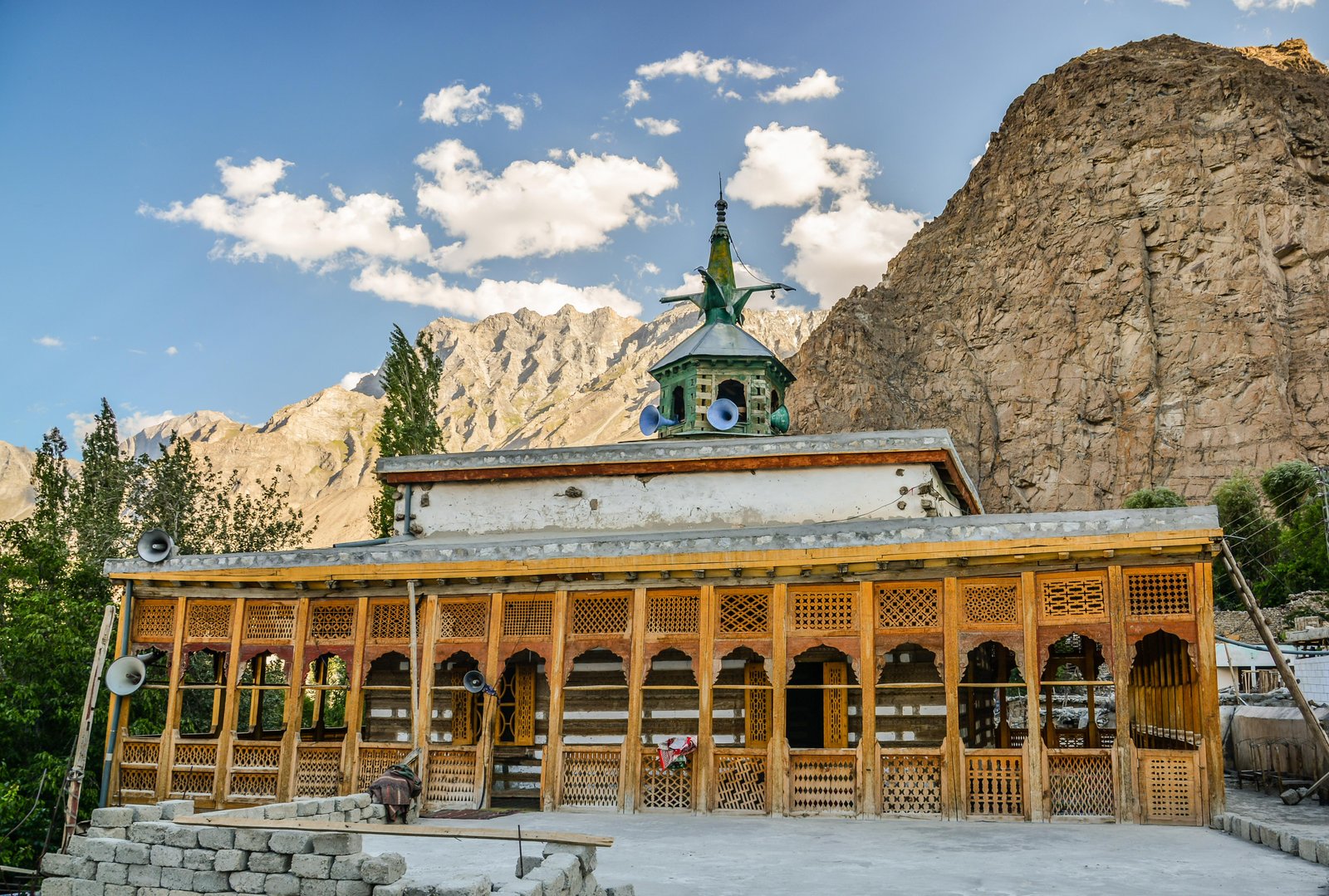
Chaqchan Mosque
Latitude: 35.15632159 Longitude: 76.33070580
Chaqchan Mosque – A
Timeless Symbol of Islamic Heritage in Baltistan
Located in the
historic town of Khaplu, Chaqchan Mosque is one of the oldest and most
significant Islamic monuments in Gilgit-Baltistan.
Surrounded by the breathtaking landscapes of Khaplu Valley, this centuries-old
mosque reflects the rich spiritual, cultural, and architectural heritage of
Baltistan.
Known for its unique
fusion of Tibetan, Persian, Kashmiri, and Mughal architectural styles, Chaqchan
Mosque is not only a place of worship but also a remarkable symbol of harmony
between local traditions and Islamic civilization.
Historical Background
Chaqchan
Mosque was built in the 14th century by the renowned Islamic scholar and
preacher Mir Syed Ali Hamdani, who played a major role in spreading Islam
across the Himalayan region. The word “Chaqchan” translates to “The Miraculous
Mosque,” reflecting its historical and spiritual importance.
For
centuries, the mosque has remained an important center of Islamic learning,
spirituality, and community life in Baltistan. Despite the passage of time, the
mosque continues to preserve its original beauty and cultural identity.
Architectural Significance
The
architecture of Chaqchan Mosque is truly unique and different from traditional
mosques found elsewhere in Pakistan. The structure beautifully combines local
Tibetan and Balti craftsmanship with Persian and Islamic artistic influences.
Key
architectural features include:
- Intricately carved wooden
ceilings
- Traditional Balti woodwork
- Tibetan-style pagoda roofing
- Decorative floral patterns
- Ancient calligraphy and artwork
- Mud-brick and timber
construction
The
mosque’s design reflects the cultural diversity and historical connections
between Baltistan, Central Asia, Tibet, and Kashmir.
Spiritual and Cultural Importance
Chaqchan
Mosque holds immense religious and cultural value for the people of Baltistan.
It has served as a spiritual center for generations and remains an active place
of worship today.
The
mosque also represents the peaceful spread of Islam in the region through
knowledge, spirituality, and cultural integration. Visitors often admire the
calm atmosphere and historical depth of this sacred site.
Visitor Experience
A visit to Chaqchan Mosque offers
travelers a chance to step back in time and experience the spiritual and
historical soul of Baltistan. Tourists can explore the mosque’s traditional architecture,
observe ancient craftsmanship, and learn about the region’s Islamic heritage.
The peaceful surroundings, mountain
backdrop, and historic atmosphere make the mosque a favorite destination for:
- Cultural tourism
- Heritage photography
- Religious exploration
- Historical research
- Architectural studies
Visitors are encouraged to respect
local customs and maintain the sanctity of the mosque during their visit.
Best
Time to Visit
The best time to visit Chaqchan
Mosque is from April to October when the weather in Khaplu Valley remains
pleasant and suitable for tourism.
- Spring:
Blooming orchards and fresh greenery enhance the beauty of the
surroundings.
- Summer:
Ideal for sightseeing and cultural tours.
- Autumn:
Stunning golden landscapes provide excellent photography opportunities.
How
to Reach Chaqchan Mosque
Chaqchan Mosque is located in Khaplu
town, approximately 103 kilometers from Skardu. The journey by road takes
around 3 to 4 hours through scenic valleys, rivers, and mountain landscapes.
Travelers can reach Skardu by air
from Islamabad or through the Karakoram Highway road route before continuing
toward Khaplu.
Why
Visit Chaqchan Mosque?
Chaqchan Mosque is one of
Baltistan’s most treasured historical landmarks. Its ancient architecture,
spiritual significance, and cultural richness offer visitors a rare glimpse
into the region’s deep-rooted Islamic heritage and artistic traditions.
For travelers seeking history,
culture, spirituality, and authentic heritage tourism, Chaqchan Mosque stands
as a must-visit destination in the heart of Khaplu Valley.